Why Fungus Gnats Get Worse in Fall
And how they get into the house when the weather turns
If the gnats showed up around the same time the heat came on, you're not imagining it. Colorado State University Extension says fungus gnat adults tend to be most noticeable in late fall and winter.
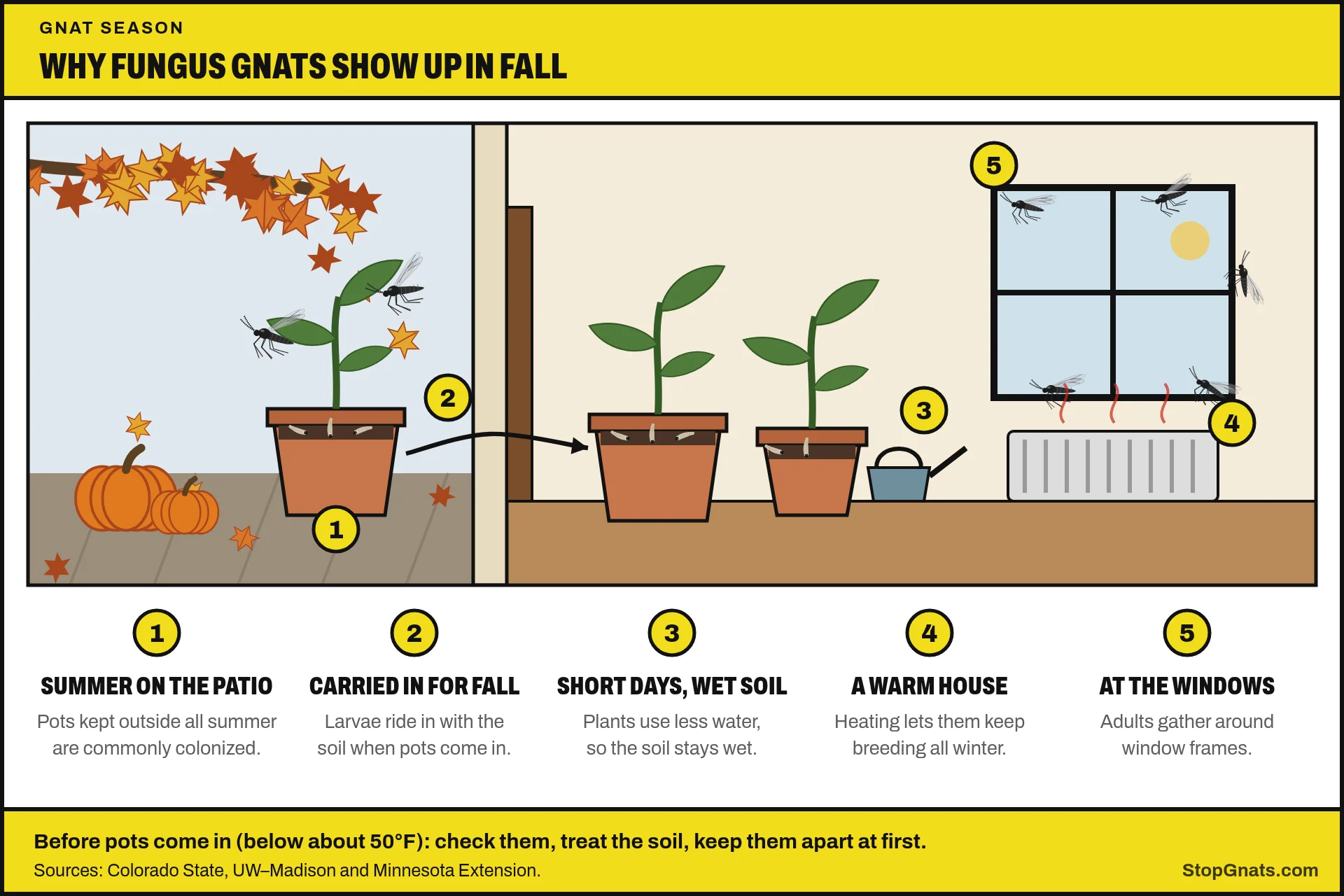
How They Get Inside
Plants that summered outside
Houseplants kept outdoors over the summer are commonly colonized by fungus gnats, and UW–Madison Extension says that's why they are often more of a problem in fall: the infested pots get brought back in. You don't carry in the adults so much as the larvae already living in the soil.
New plants and bagged mix
A new plant can arrive with larvae in its pot, and potting mix stored open or damp can be infested before you ever use it. Check new plants with a potato piece and keep bags of mix dry and closed.
A heated house
Outside, the cold slows them down. Inside, a heated home lets them keep breeding all winter, about every 3–4 weeks at room temperature. See the life cycle.
At the windows
Adults are drawn to light, and Colorado State notes they often collect around window frames. That's usually where you first notice them, even though they're breeding in the pots.
Why the Soil Stays Wet
Shorter days and cooler rooms slow a plant's growth, so it uses less water. Colorado State Extension says that if you keep watering the way you did in summer, especially in fall and winter, the mix stays moist and the gnats thrive.
- Water by feel, not by the calendar. Push a finger into the top inch before you water. The summer schedule is too much for winter.
- Let the top 1–2 inches dry between waterings where the plant can take it. Colorado State calls this the most important step.
- Empty the saucers. Don't leave pots sitting in standing water.
Bringing Plants In: A Checklist
Watch the forecast
Minnesota Extension says to bring most houseplants in once nights drop below about 50°F.
Check every pot
Look plants over before they come in. Put a raw potato piece cut side down on each pot for 48 hours; larvae on the cut face mean that pot needs treating.
Treat before the move
Minnesota Extension suggests treating about three weeks before plants come in for good. That lines up with a three-week BTI course: start it on the patio and the last drench lands around moving day. Make your plan →
Keep them apart at first
Quarantine plants returning indoors in a separate spot, away from your other plants, with a yellow sticky trap in each pot so you can see whether anything hatches.
Water less from now on
Switch to winter watering straight away. The soil drying between waterings is what keeps the next generation from getting started.
Gnats at the Thanksgiving table?
Little slow fliers hanging around potted plants and windows are fungus gnats. Flies circling the fruit bowl, the compost or the trash are more likely fruit flies, and they need a different fix. Which little fly is it? →
If it is fungus gnats, the adults won't hurt anyone, but the larvae in the pots will keep the supply coming. Start the three-week plan now and you'll be through it before the winter holidays.
Sources
- Fungus Gnats as Houseplant and Indoor Pests, Colorado State University Extension
- Fungus Gnats on Houseplants, University of Wisconsin–Madison Extension
- Bringing Houseplants in for Winter, University of Minnesota Extension
- Pest Notes: Fungus Gnats, UC Statewide IPM Program
- Managing Fungus Gnats in the Greenhouse, UConn Extension
- Small Flies (ENTFACT-657), University of Kentucky Entomology