Long-Term Fungus Gnat Prevention
Keep them gone once you've eliminated them
Prevention Strategies
Bringing plants in for the winter? See why gnats get worse in fall and the checklist for moving pots indoors.
Water Management
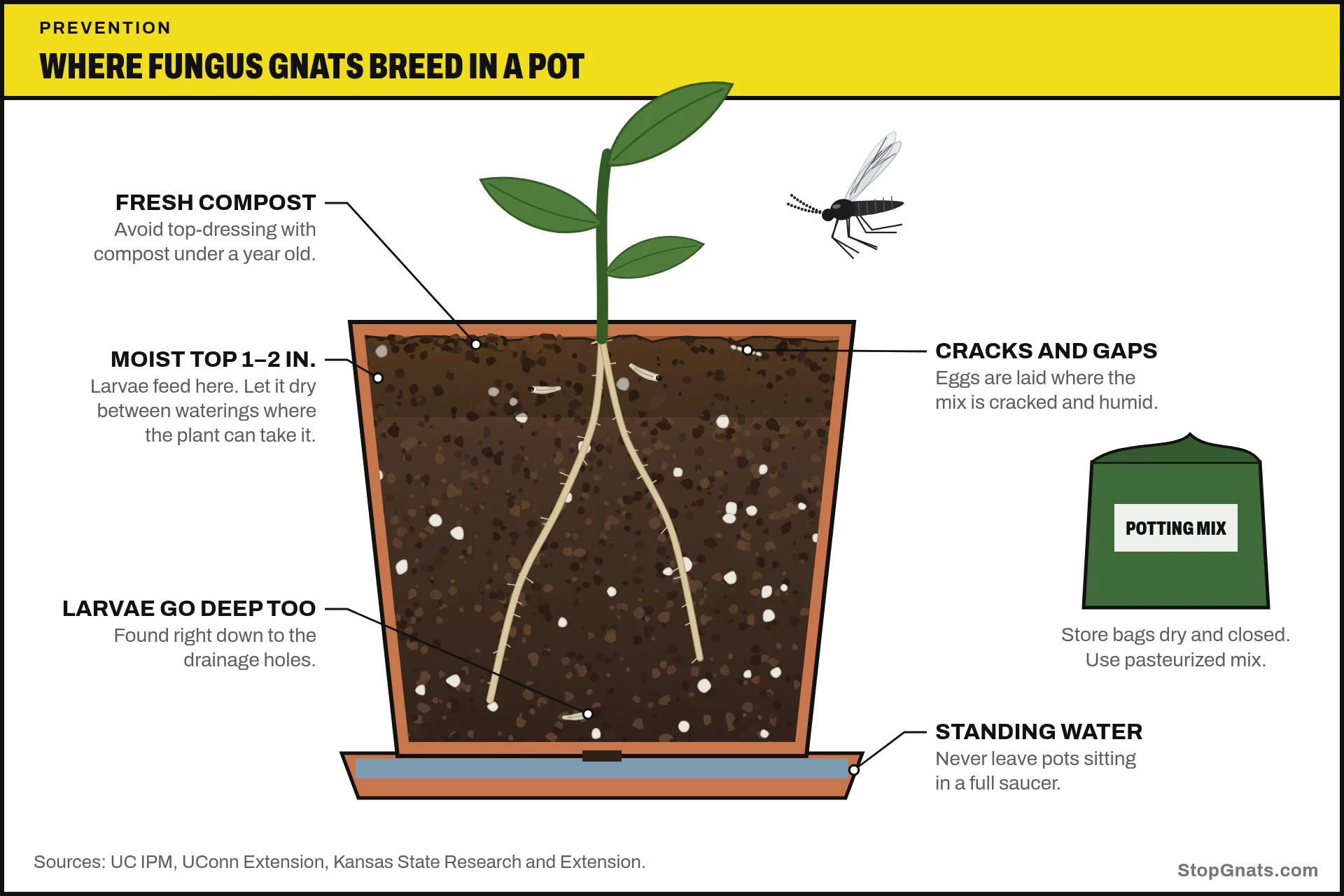
Allow the top 1–2 inches of soil to dry between waterings where plant health permits. Use well-draining soil mixes with adequate perlite. Bottom-water when possible. Never let pots sit in saucers of standing water. Fix leaks and eliminate puddling in greenhouses.
Soil & Media Hygiene
Use pasteurized potting mixes. Store bagged soil dry and keep the bags closed and intact. Remove fallen leaves and decaying plant material from soil surfaces. Avoid top-dressing with compost less than a year old. Clean algae from surfaces, benches, and floors.
Environmental Controls
Screen windows and doors. Seal gaps around doors and vents. Adults are drawn to light and gather at windows, so that's where they get in and where you'll spot them first.
Routine BTI Maintenance
Even after elimination, put a dilute BTI drench into your regular watering rotation (every 2nd–3rd watering). The Gnatrol label describes this as regular follow-up applications at the light rate to set up a long-term maintenance program. It catches larvae from new eggs before they build up. Cheap insurance: at the light rate on the Microbe-Life FGX directions (1/2 to 1 teaspoon per gallon), an 8 oz bottle makes about 48 to 96 gallons.
Quarantine Practices
Keep new plants apart from your collection for a few weeks before introducing them. Inspect purchased plants carefully, and put a potato piece on the soil to check for larvae. Treat new soil with BTI before potting. Don't move infested plants to new areas.
Ongoing Monitoring
Keep yellow sticky traps out permanently as an early warning system. Place them horizontally at the soil surface. Check weekly; a jump in trapped adults means it's time for a treatment cycle. Potato pieces on the soil show you larvae directly.
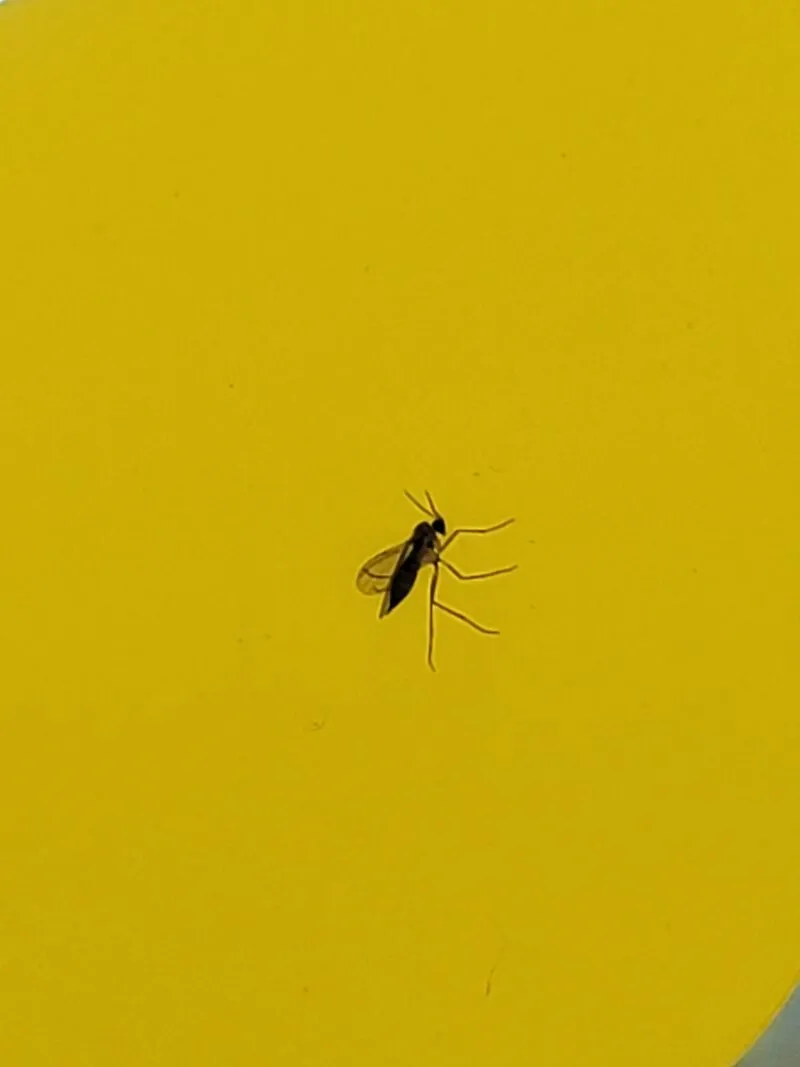
Photo: Dan Killam / iNaturalist, CC BY
The Prevention Mindset
Prevention never really ends, because fungus gnats normally live outdoors and new ones will keep finding your plants. People without a gnat problem still get gnats. They just have a routine (BTI every few waterings, sticky traps, sensible watering) that kills them before they can breed. Think of it like brushing your teeth: you don't stop because your teeth are clean today.
Sources
- Fungus Gnats, Colorado State University Agricultural Biology
- Pest Notes: Fungus Gnats, UC Statewide IPM Program
- Managing Fungus Gnats in the Greenhouse, UConn Extension
- Fungus Gnat Management in Greenhouses and Nurseries (MF2937), Kansas State University Research and Extension
- Small Flies (ENTFACT-657), University of Kentucky Entomology
- VectoBac WDG / Gnatrol WDG label (EPA Reg. No. 73049-56), Valent BioSciences via US EPA
- BMP 144 (2X) label (EPA Reg. No. 62637-1), Becker Microbial Products via US EPA
- Microbe-Life FGX fungus gnat directions, Ecological Laboratories (Microbe Life Hydroponics)