What Are Fungus Gnats?
Make sure it's fungus gnats before you treat anything
Fungus gnats are small flies in the order Diptera, family Sciaridae (dark-winged fungus gnats). The most common species found in homes and greenhouses are Bradysia coprophila and Bradysia impatiens. They are found throughout the United States and worldwide wherever plants are grown in moist organic media.
Adult Gnats
Slender, mosquito-like flies about 1/8 inch (3–4mm) long. Grayish to black with long legs, antennae longer than their head, and one pair of clear or light gray wings with a Y-shaped vein. Weak fliers that run over the soil or make short, darting flights. Often seen near windows, around soil surfaces, and flying out when plants are disturbed.
Adults live 7–10 days and do not bite people. They do little or no harm to plants themselves.
Larvae (The Damaging Stage)
White to translucent, legless maggots about 1/4 inch (5–6mm) long with a distinctive shiny black head capsule. You can see the gut contents through the skin. Most are in the top 1–2 inches of growing media.
Larvae feed on fungi, decaying organic matter, root hairs, and plant roots. When there are a lot of them they can leave shiny slime trails on the soil surface.
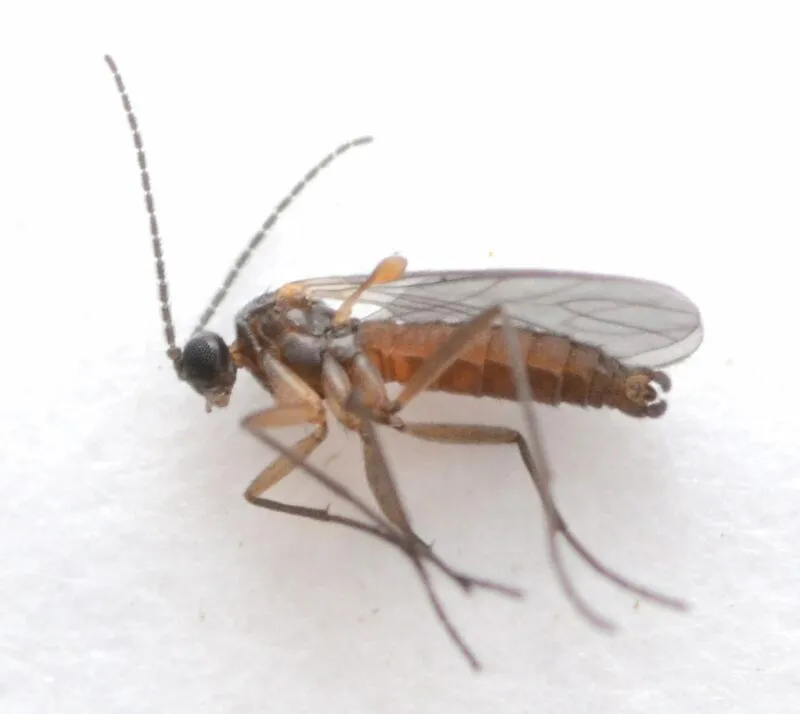
Photo: Wikimedia Commons, CC BY-SA 3.0
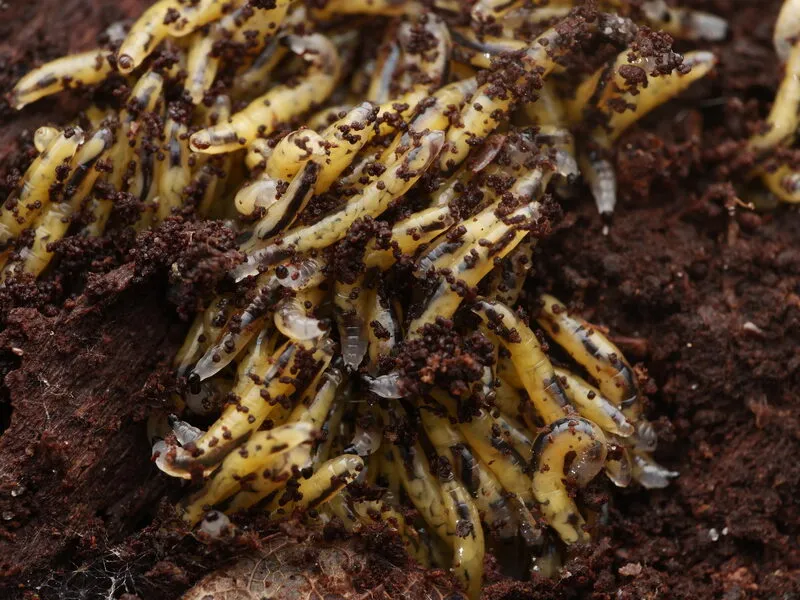
Photo: Alexis Tinker-Tsavalas / iNaturalist, CC BY
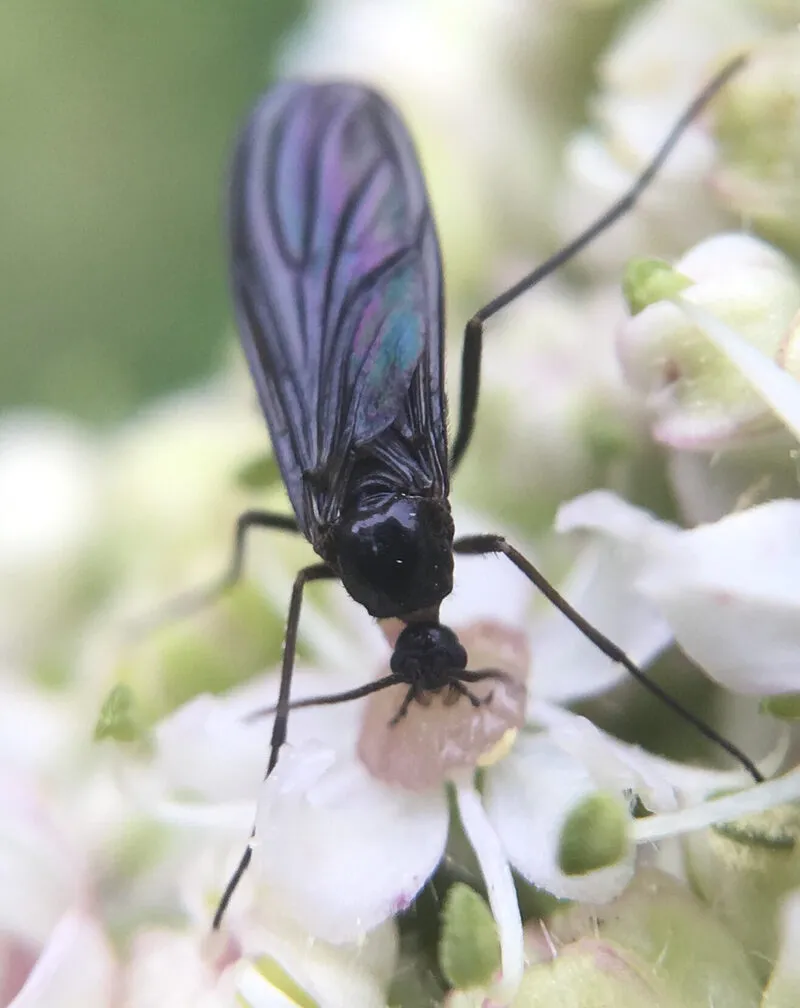
Photo: Paul Cook / iNaturalist, CC BY
How to Tell Them Apart from Similar Pests
Fungus gnats are commonly confused with three other household pests
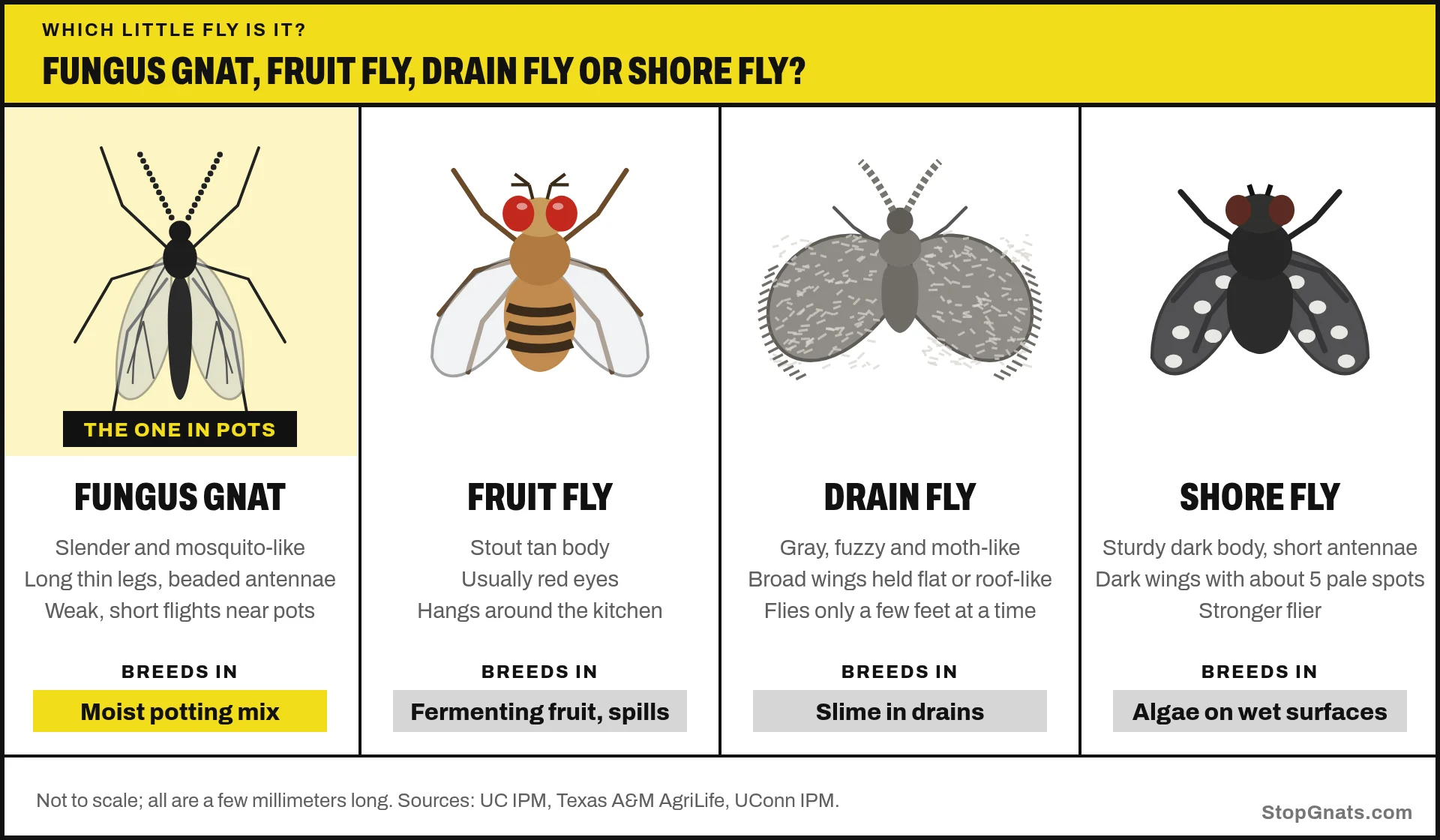
Fungus Gnats vs. Fruit Flies
Fruit flies (Drosophila) are brown-black with red or black eyes and look like tiny house flies. They breed in overripe fruit and are drawn to fermented things like vinegar, beer and juice, not soil. Fungus gnats look more like tiny mosquitoes, with long legs and antennae, and hang around potting soil.
Fungus Gnats vs. Drain Flies
Drain flies (moth flies) look like tiny moths: hairy bodies and broad, hairy wings held roof-like over the body. They breed in the organic gunk that builds up in sink and shower drains, and they usually rest on walls near the drain. If the flies are coming from your bathroom or kitchen sink, they are probably drain flies, not fungus gnats.
Fungus Gnats vs. Shore Flies
Shore flies look like small house flies: a sturdy dark body, short bristle-like antennae, short legs, and about five light spots on each dark wing. They are stronger fliers than fungus gnats. Shore fly larvae feed on algae, not plant roots. You often find both in the same greenhouse.
Scientific Classification
| Rank | Classification |
|---|---|
| Order | Diptera |
| Family | Sciaridae (Dark-winged Fungus Gnats) |
| Common pest species | Bradysia coprophila, Bradysia impatiens |
| Common names | Dark-winged fungus gnats, soil gnats |
Where They Come From
Fungus gnats can arrive in your home or growing space through several routes:
- Outdoors in mulch, compost piles, and damp soil. Fungus gnats normally live outdoors, and many species breed in compost and other decaying organic matter
- In bagged potting soil. Gnats can come in with bagged growing media, especially bags that are torn or stored outside and kept damp
- On new plants. Plants from garden centers and greenhouses can carry larvae in their soil
- Flying in through windows and doors. Adults are drawn to light and often gather at windows. A single pregnant female that finds your plants can start a full infestation
- More noticeable in late fall and winter. When outdoor plants are brought indoors for the season, any gnats living in the soil come along for the ride
Understanding where fungus gnats come from is the first step to prevention. Even a perfectly maintained plant collection can be reinfested from a single outside source, which is why ongoing monitoring and preventive BTI treatments are so important.
Sources
- Pest Notes: Fungus Gnats, UC Statewide IPM Program
- Darkwinged Fungus Gnats, Bradysia spp. (EENY-215), University of Florida IFAS Extension
- Fungus Gnat Management in Greenhouses and Nurseries (MF2937), Kansas State University Research and Extension
- Small Flies (ENTFACT-657), University of Kentucky Entomology
- Managing Shore Flies in the Greenhouse, UConn Extension
- Managing Fungus Gnats in the Greenhouse, UConn Extension
- Fungus Gnats, Colorado State University Agricultural Biology